
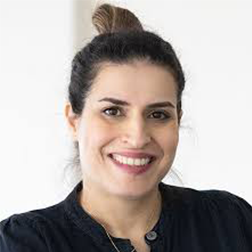
As we age, our cognitive function—our ability to think, remember, and make decisions—often declines, but the rate of decline varies widely among individuals. Some people experience rapid cognitive decline, while others maintain sharp mental abilities later in life. Cognitive aging is complex and influenced by biological changes, including inflammation, cell damage, vascular dysfunction, and more. These changes can become more noticeable with age and may suggest that someone is aging faster than their actual years.
In this interview, Dr. Sedaghat discusses her project to use protein data from a large, long-term study of Black and White adults with the goal of developing “protein-based aging clocks” to measure biological age. With support from the McKnight Brain Research Foundation’s Innovator Award, Dr. Sedaghat is exploring how these clocks relate to different patterns of cognitive decline with the goal of better predicting who might experience faster cognitive aging.
Q: What inspired you to pursue aging research?
A: I was actually more focused on disease-based research starting out, but eventually I realized that aging is a major risk factor for many chronic diseases. Once I realized that aging connects all organs and risk factors, yet not everyone has the same trajectory, I became interested in understanding the biological age rather than just calendar age, with the goal of developing better ways to prevent aging-related diseases and promote healthy years of life. Also, as our society is aging rapidly, dementia and neurodegenerative diseases are becoming major public health problems, and it’s important to study and identify new ways to keep people healthy as they age.
Q: How has the Innovator Award supported and impacted the trajectory of your research career?
A: First, I was so excited to receive the Clinical Translational Research Scholarship from the McKnight Brain Research Foundation in 2018. At the time, I wasn’t eligible for many NIH grants due to my visa status, but the McKnight Brain Research Foundation has been instrumental to my career as a neuro-epidemiology researcher. The support from the Clinical Translational Research Scholarship really helped establish my career studying -omics. From there, I was able to secure funding through an R01 award and an R21 grant, which helped me gather the preliminary data to submit for the Innovator Award.
The timing of the Innovator Award was perfect. I had just finished the R21 focused on developing the biological aging clock, and the support from the Innovator Award allowed me to take the data a step further to begin studying cognitive aging specifically. The award also gave me the funding to initiate collaboration with various institutes and measure novel CNS-derived biomarkers in a large population-based cohort. The collaboration has resulted in preliminary data that could lead to future research projects and publications. Both awards have really helped me to develop a valuable professional network and increase my visibility in the research community.
Q: What have been your most promising findings to date?
A: I received the Innovator Award in 2025 and am now entering the second year of the project. As part of this project, we developed biological aging clocks at two time points: midlife (participants in their 50s) and late adulthood (participants in their 70s). At both time points we observed that dementia-free individuals with higher biological age relative to their chronological age experienced faster cognitive decline.
Moving forward, we are measuring 120 brain-related biomarkers that can be measured in one run. We have plans to analyze these biomarkers in approximately 7,000 participants, including oversampling of those with brain MRI, while being mindful of potential biases in healthier participants. This work is conducted in collaboration with a multidisciplinary team, including cardiology and neurology experts, to ensure we answer research questions effectively. We’re excited to see if biological clocks using the brain-related biomarkers can improve prediction of cognitive aging and dementia risk, and to identify the most informative brain-related biomarkers driving these associations.